

Vintage Flea Market Checklist: 15 Questions to Ask Before You Buy
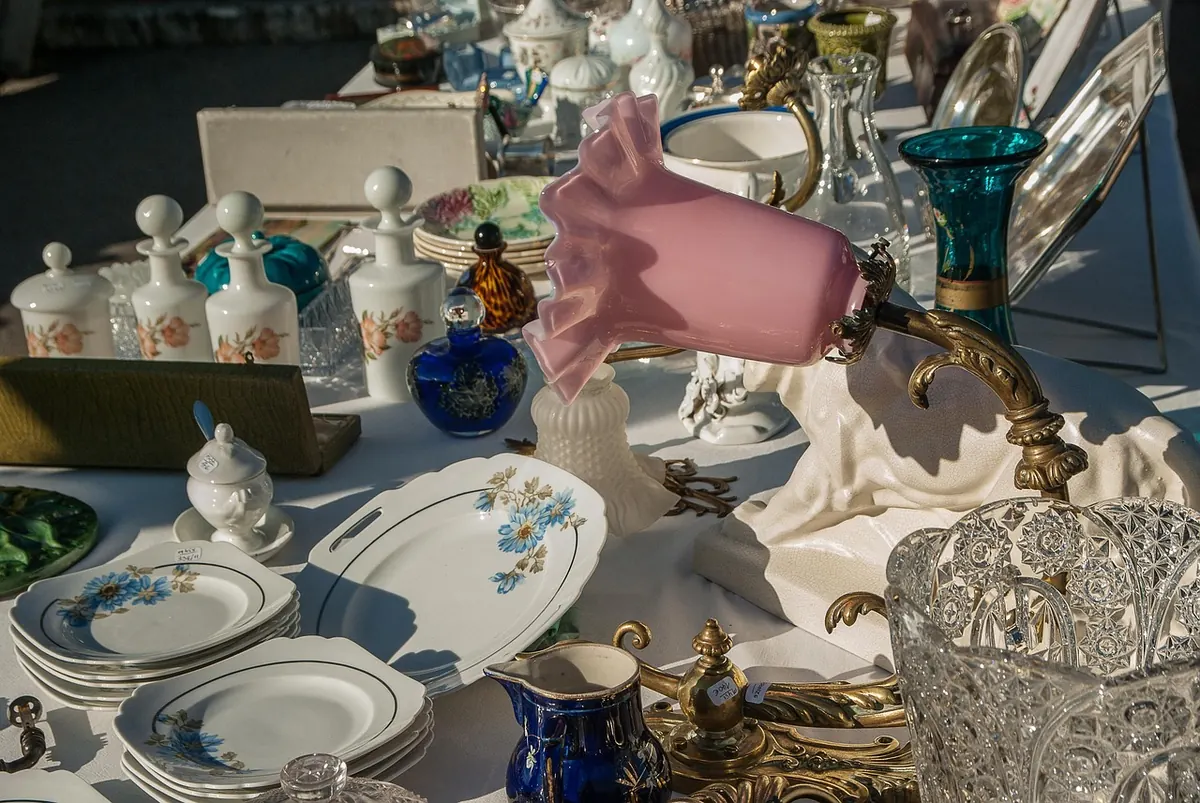
The best things are rarely on the front of the table. They are underneath it, behind the stallholder's folding chair, or still half-buried in the van that hasn't been unloaded yet. Flea markets reward the buyer who slows down — and slowing down is hard when a decent café chair is sitting there at the price of a sandwich and two other people are already circling it.
So it helps to arrive with a few questions in your pocket. Not rules that spoil the fun, just a way of turning a rush of excitement into a decision you can live with on Monday morning. Fifteen of them, roughly in the order you will need them.
Start With Condition, Not Charm
Charm is free. Condition is what you actually pay for. Ask these while your hands are still on the piece and your money is still in your pocket.
1. What here is original, and what has been replaced? "Restored" can mean a careful waxing or a full strip and refinish, and those are very different things. A stallholder who knows their stock will tell you plainly: new hinges, a replaced drawer front, a repaired leg. Vague answers are useful information too.
2. Can I see the back, the underside, and inside the drawer? Never buy a chest without pulling the drawers out. The back panel, the drawer bottoms and the underneath of a table tell you more than the polished top ever will — old repairs, water damage, replaced timber, the odd bit of cardboard shimming a wobbly joint.
3. Has it been stored somewhere damp? Then smell it. Damp lives in the wood long after the surface has dried out. Look for rust bleeding through paint, flaking veneer, white bloom on the wax, a musty drawer interior. Mildew in upholstery or cushions is very hard to shift, and usually not worth the fight.
4. What's missing? A missing key is nothing. A missing hinge, one original handle, a finial, a length of period glass or a castor on an otherwise complete set is a different conversation. Ask what it would take to replace the part and whether you would rather have the piece without it.
5. Is anything loose — and what is that pile of dust? Rock it gently. Tap the legs. If there is a small heap of fine, pale sawdust under a piece of furniture, that is frass, and it usually means active woodworm rather than an old, finished infestation. Walk away, or at least price the problem in.
Authenticity and Age: Read the Object, Not the Story
Every stall has a story. Some are true, most are approximate, and a few are pure theatre. You are not looking for proof — you are looking for consistency between the words and the wood.
6. How do you date it? Listen to the answer, then check it against the object. A seller who says "my father bought it from a house clearance in the village in the seventies" is telling you something different from a seller who says "Victorian, definitely." Neither is dishonest; only one is a story about the object itself.
7. Are the marks right for the piece? Look for impressed stamps, printed paper labels, maker's plaques, stencilled numbers. A label should look as old and as fixed as the thing it is stuck to. Fresh glue under a ninety-year-old paper label is worth a second look.
8. Are these parts a marriage? Plenty of tables are a top from one and a base from another, joined up years ago and sold as a whole. Check whether the wood tone matches where the light doesn't reach, whether screw holes line up with their screws, whether the top overhangs evenly on all four sides.
9. Does the wear make sense? Use is honest and hard to fake well. Hands polish the edges of a drawer pull; feet scuff the bottom rail; a chair seat sags where people sat. Watch for these contradictions:
- Sharp, unworn feet on a piece described as very old.
- Wear in the middle of a surface but not where hands would actually go.
- Uniform scratches all over, as though applied with a brush.
- Crisp saw marks hidden on the inside where nobody would ever look.
- Square-drive or Phillips screws in something presented as pre-war.
Function: Will It Work in Your House?
10. Can we test it now? Lamps, clocks, radios, anything with a flex — ask for a socket. If the stall has no power, that is a reason to reduce your offer, not to assume it works. Perished rubber cable and crumbling plugs are common on old lighting, and anything you actually intend to switch on should be checked over by a qualified electrician before it goes anywhere near a wall.
11. What will it cost to make it usable? Rewiring, reupholstery, new glass, a replacement lock, a joiner's afternoon. Add your realistic estimate to the asking price before you decide, and be honest about whether you will actually get the work done or just live with the droopy seat for a decade.
12. Will it fit — and survive the trip? Measure the doorway, not just the wall. A tall wardrobe that will not turn on the stairs is an expensive mistake, and a mirror strapped loosely to a roof rack is a sad ending. Ask whether they can hold it for an hour while you fetch a bigger car, and whether they have blankets.
Price: The Part Most People Get Wrong
13. Is this price right for this condition, on this morning? Walk the rest of the market first if you can. Prices at flea markets are not fixed by any authority; they are set by the stall and the day, and the same category of object will vary wildly between sellers fifty metres apart.
14. Would you do better if I take two, or pay now? A respectful, specific offer works far better than a theatrical sigh. "I'll give you this for the pair, cash, today" is a complete sentence. Say it once, be willing to walk away, and don't take a refusal personally.
15. Can you hold it, and what happens if it's wrong when I get home? Get a name and a phone number. Ask plainly about returns — many stalls sell as seen, and that is fair enough as long as you know it before you pay. For anything more than a modest sum, especially signed pieces, silver, jewellery or anything sold to you as a genuine antique, treat the seller's description as a starting point rather than a valuation and get a specialist opinion before you commit. On matters of money that matter to you, professional advice is worth the fee.
A Short Version for Your Pocket
You will not remember fifteen questions with a stallholder waiting. Remember this instead:
- Turn it over before you fall for it.
- Smell it, rock it, open every drawer.
- Test anything electrical, or price in the repair.
- Measure the door, the car and the corner it is going in.
- Ask for a name, a number and a straight answer about returns.
Then buy the thing you keep coming back to. A good flea market find is not the cheapest object on the field — it is the one you are still glad to see in the hallway next winter, doing exactly what you hoped it would.
Photo: jackmac34 / Pixabay